
From Zero to Hero: Choosing Your First Curso de Drone
Why 2026 is the Best Time to Take a Drone Course
If you are looking for a curso de drone, here is the essential information you need to know before choosing:
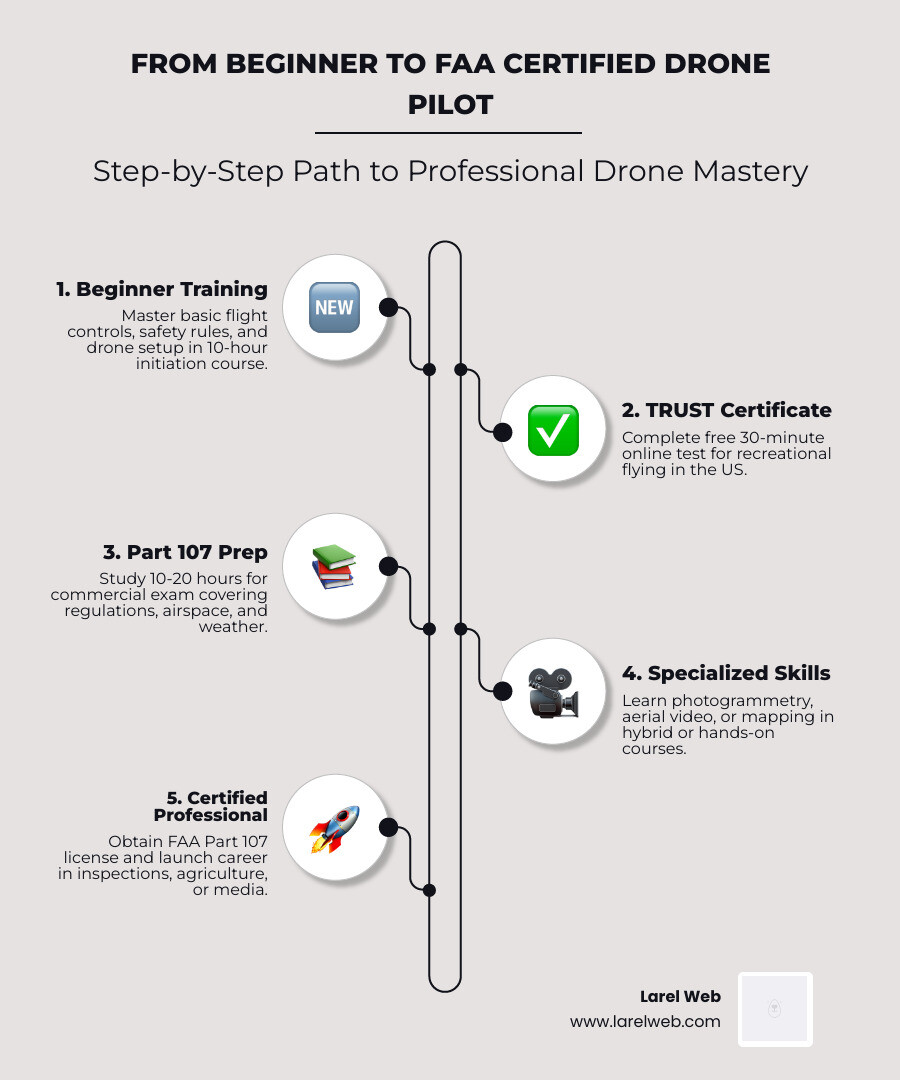
Main types of drone courses available:
| Course Type | Who It’s For | Average Duration | Modality |
|---|---|---|---|
| Flight Initiation | Beginners (16+) | 10 hours | In-person / Online |
| FAA Part 107 Prep | Commercial pilots in the US | 10–20 hours | Online |
| TRUST Certificate | Recreational pilots in the US | ~30 minutes | Online (free) |
| Aerial Photo & Video | Content creators | Variable | Hybrid |
| Photogrammetry & Mapping | Technical professionals | 16–40 hours | Hybrid / In-person |
| Inspection & Maintenance | Technicians and engineers | Variable | In-person |
The drone market has grown impressively. In 2026, operating a drone professionally is not just a skill — it is a complete career. For more information on official regulations, you can visit the FAA official website.
But with so many course options, formats, and certifications, choosing the right path can seem confusing.
Do you want to capture incredible aerial images? Work with topographic mapping? Obtain your FAA Part 107 certification for commercial flights in the US? Each goal requires a different training.
The good news: more than 260,000 recreational pilots have already completed safety training, and thousands of others have obtained commercial certifications — proving that learning to fly professionally is within reach for anyone willing to study.
In this guide, we will help you find the right curso de drone for your level, goal, and budget.
Types of Drone Courses: Finding the Right Level for You
Choosing the ideal curso de drone depends entirely on where you are today and where you want to go. There is no point in investing in an advanced thermography course if you still get butterflies in your stomach when taking off. In 2026, drone academies structure their curricula modularly so you can evolve gradually.
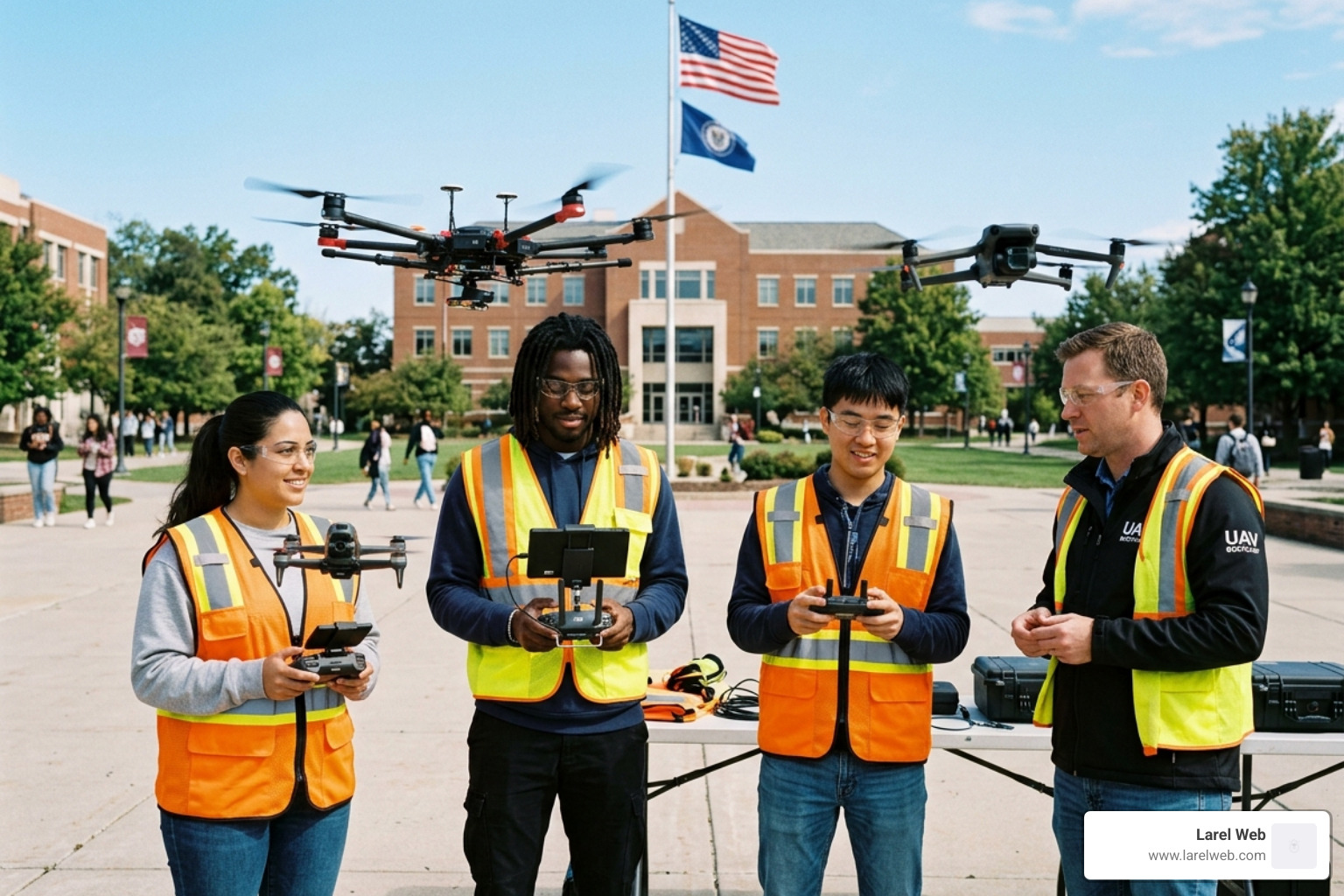
Flight Initiation courses are the gateway. They focus on the basics: how to set up the drone, understand pitch, yaw, and roll controls, and perform safe takeoffs and landings. For those seeking professionalization, there are Professional Operation courses, which teach flight methodology, risk analysis, and the use of rigorous checklists.
If your interest is technical, you will find specific training in Photogrammetry, where you learn to transform aerial photos into 3D maps and topographic models. For creatives, Audiovisual courses focus on cinematographic techniques, camera movements, and video editing. If you want to ensure you are on the right track, we recommend exploring the Discover Professional Drone Training to understand the market basics, or check out our Advanced Pilot Certification Programs if you already have experience.
Requirements and Target Audience
Most people ask: “Can I be a pilot?”. The short answer is: yes! But there are some criteria. For professional-level courses and official certifications like the FAA Part 107, the minimum age is usually 16 years old. A university degree is not necessary, but it is essential to know how to read, write, and understand the language in which the course is taught (especially important for US exams, which require English proficiency).
Regarding equipment, many in-person “Flight Initiation” courses provide the drone for practical classes, which is great for those who haven’t decided which model to buy. However, for mapping or advanced photography courses, having your own equipment helps consolidate learning. At Larel Web, we believe technology should be accessible to everyone. More info about our mission shows our commitment to democratizing this knowledge.
Duration and Average Investment
The time and money invested in a curso de drone vary according to complexity:
- Quick and Certification Courses: Preparatory courses for the FAA Part 107 or initial courses usually last between 10 to 20 hours of focused study. The cost can vary from $299 to $499 USD.
- Intensive Training and Diplomas: Courses that combine theory, simulator, and in-person practice can reach 90 hours of workload. The investment here is higher, potentially exceeding $1,000 USD.
- Technical Specializations: Topographic mapping or agricultural spraying courses last from 2 to 5 days (16 to 40 hours) and focus on specific software.
Many schools offer financing options in up to 12 installments or discounts for early birds. Additionally, there are scholarship programs aimed at veterans, students, and people with disabilities, aiming to increase diversity in the aerospace sector.
Essential Certifications: FAA Part 107 vs. TRUST Certificate
Understanding regulations is what separates a hobbyist from a respected professional. In the United States, the FAA (Federal Aviation Administration) defines clear rules for those who take to the skies.
| Feature | TRUST Certificate | FAA Part 107 |
|---|---|---|
| Objective | Recreational flight (fun only) | Commercial flight (work/profit) |
| Difficulty | Simple (30 min, online) | Rigorous (In-person theoretical exam) |
| Cost | Free | Exam fee (~$175) + Course |
| Validity | Lifetime (if you don’t lose the paper) | 24 months (requires online renewal) |
| Age Requirement | No minimum age | Minimum 16 years old |
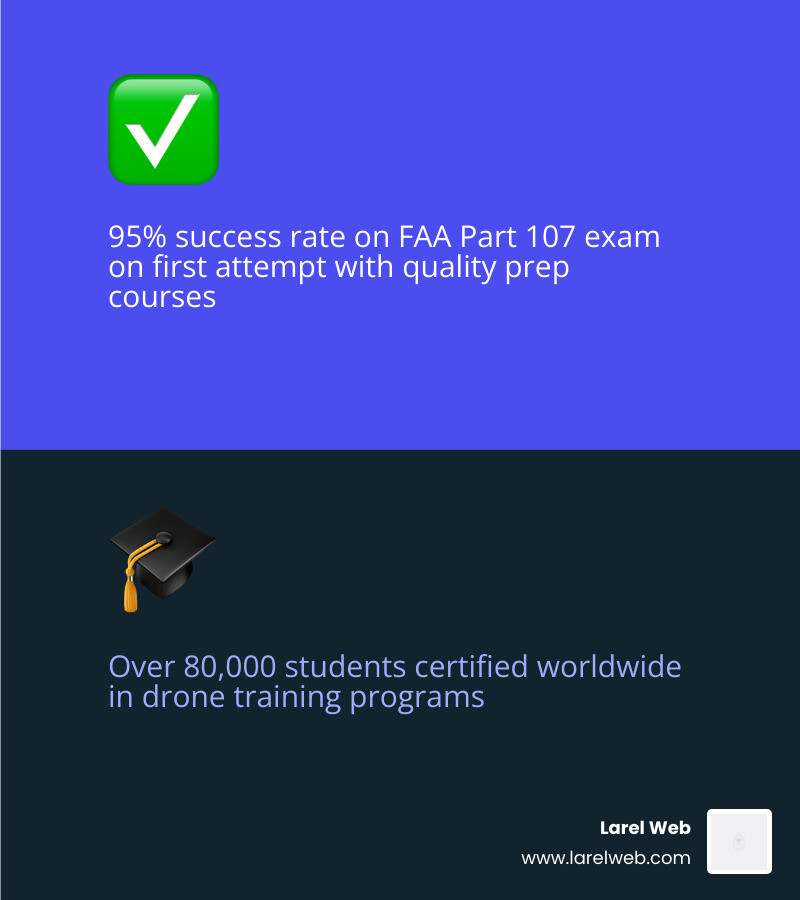
Statistics don’t lie: taking a quality preparatory course makes all the difference. Some academies boast a success rate of 95% to 99% on the Part 107 exam on the first attempt. With more than 80,000 students graduated in global education networks, the path to certification is more paved than ever. For those who want to take this seriously, our Professional Drone Pilot Training Guide details every step of this process.
The Importance of Regulation in 2026
In 2026, oversight of drone use is stricter. Flying without the proper certification not only generates heavy fines but also prevents the hiring of insurance and obtaining authorizations to fly in restricted areas (via systems like LAANC).
Being in legal compliance means safety for you and the people around you. Learning involves understanding airspace classes, meteorology, and how to act in emergencies. If you want to stay up to date with the latest news on drone laws, be sure to Visit our homepage.
What to Learn in a Professional Drone Course?
A good curso de drone goes far beyond “moving the sticks.” Modern training is divided into theoretical, practical, and data processing skills.
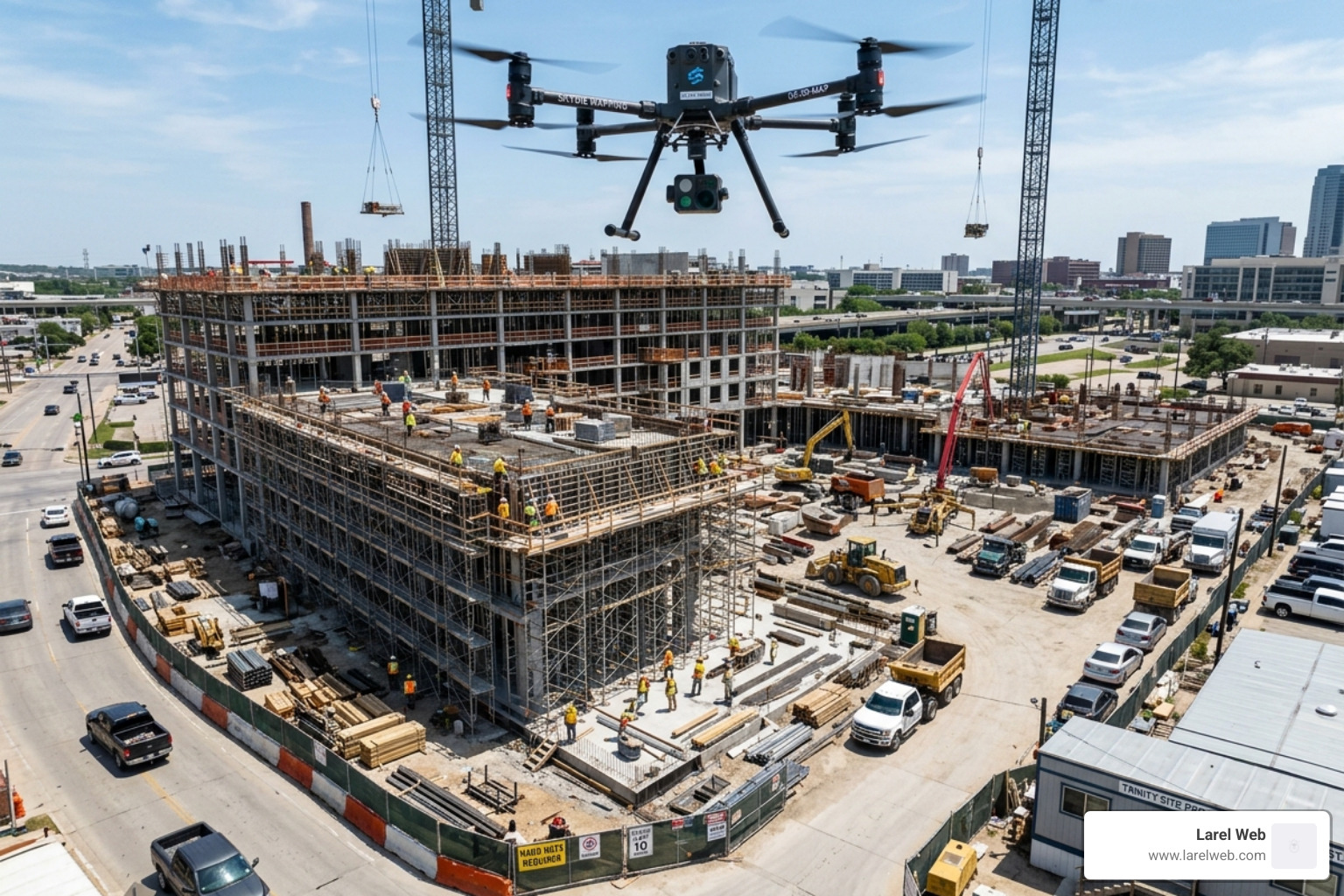
Technical Skills in a Drone Course
By enrolling in an elite training program, you will learn:
- Precision Piloting: Safety maneuvers, manual mode flight, and use of intelligent functions (RTH, Waypoints).
- Photogrammetry: How to plan mapping missions to generate orthomosaics, digital terrain models (DTM), and contour lines.
- Basic Maintenance: IMU and compass calibration, LiPo battery care, and propeller inspection.
- Processing Software: Use of tools like Pix4D, Agisoft Metashape, or DJI Terra to transform photos into actionable data.
If your focus is the engineering or agribusiness sector, the Specialized Mapping and Surveying Courses are indispensable for mastering these technologies.
Career Opportunities after the Drone Course
The certificate in hand opens doors in sectors you might not even imagine:
- Precision Agriculture: Identification of pests and planting failures.
- Infrastructure Inspection: Checking roofs, power towers, and solar panels without exposing humans to risks.
- Real Estate Market: Cinematographic videos for luxury sales.
- Security and Surveillance: Monitoring perimeters and events.
The possibilities are vast, and you can explore more about these paths in Career Paths in Drone Technology.
Learning Modalities: Online, In-Person, or Hybrid?
Technology has also changed the way we learn. Today, you can choose the format that best suits your routine.
Advantages of In-Person Training
Nothing replaces face-to-face interaction and field practice with an experienced instructor. In the in-person format (or bootcamps), you get immediate feedback on your movements, access to state-of-the-art drones provided by the school, and the opportunity to network with other pilots. It is ideal for those who want to lose the fear of flying and learn safety procedures in practice.
Benefits of Online Training
The online modality has gained full strength. Courses like the Part 107 prep work very well in this format, offering:
- Lifetime Access: You can review classes whenever there is an update in the laws.
- Flexibility: Study at your own pace, whether in an intensive week or over two months.
- Global Community: Support via forums and weekly webinars with specialists. With more than 4,500 5-star reviews on leading platforms, online teaching has proven to be extremely effective for the theoretical and regulatory part. For those seeking this freedom, see the Flexible Learning Options for Pilots.
How to Choose the Best Drone Academy in 2026
With so many curso de drone options, how do you avoid falling into traps? Here are the criteria we at Larel Web recommend observing:
- Instructor Experience: Check if they are FAA-certified pilots (or local bodies like ANAC/AFAC) and if they have real market experience.
- Post-Course Support: Does the academy offer consulting or an alumni community? Support after completion is vital when you face your first professional challenge.
- Approval Guarantee: Some schools offer a refund of the exam or course fee if you do not pass the FAA exam after following the study plan.
- Teaching Material: Check if they offer PDF guides, updated mock exams, and access to live webinars.
If you still have questions about which path to follow, contact us: Contact us for expert advice.
Frequently Asked Questions about Drone Training
What is the difference between the TRUST certificate and Part 107?
TRUST (The Recreational UAS Safety Test) is mandatory for those who fly only for fun and is free. Part 107 is the commercial certification required by the FAA for anyone who wants to work with drones in the US. The Part 107 exam is much more difficult and requires deep aviation knowledge.
Do I need to have my own equipment to take a drone course?
Not necessarily. Many in-person schools provide the equipment for training. However, if you choose an online or hybrid course, you will need a drone to practice the proposed exercises and familiarize yourself with the flight software.
How difficult is the FAA Part 107 exam?
The exam has 60 multiple-choice questions. Without study, the failure rate is high. However, students who use dedicated preparatory courses have a pass rate of over 99%. The average recommended study time is 15 to 20 hours.
Conclusion
In 2026, the sky is no longer the limit, but your new office. Whether you are an enthusiast who wants to capture family vacations safely or a professional seeking a career transition to aerial technology, the first step is investing in knowledge.
A quality curso de drone doesn’t just teach you how to fly; it teaches you to think like an aviator, to respect the laws, and to deliver results that add real value to the market. At Larel Web, we are ready to be your co-pilots on this journey. “Fly high, record the world” and start your transformation today.
Start your journey today and discover how drone technology can change your perspective — literally! Also, explore our Homepage for more equipment reviews or contact us at Contact Us to clear up any remaining doubts. The future of professional flight awaits you.
